Racing guide
Horse Race Betting in Canada: Pari-Mutuel Pools, the CPMA and Where to Bet
Casino newsUpdated
Legal horse race betting in Canada runs on the pari-mutuel system: bettors wager against each other, not a bookmaker, and winners share a pool after the racetrack's percentage and a federal levy are deducted. The Canadian Pari-Mutuel Agency supervises it under section 204 of the Criminal Code, and you can bet at tracks, licensed betting theatres or by account.
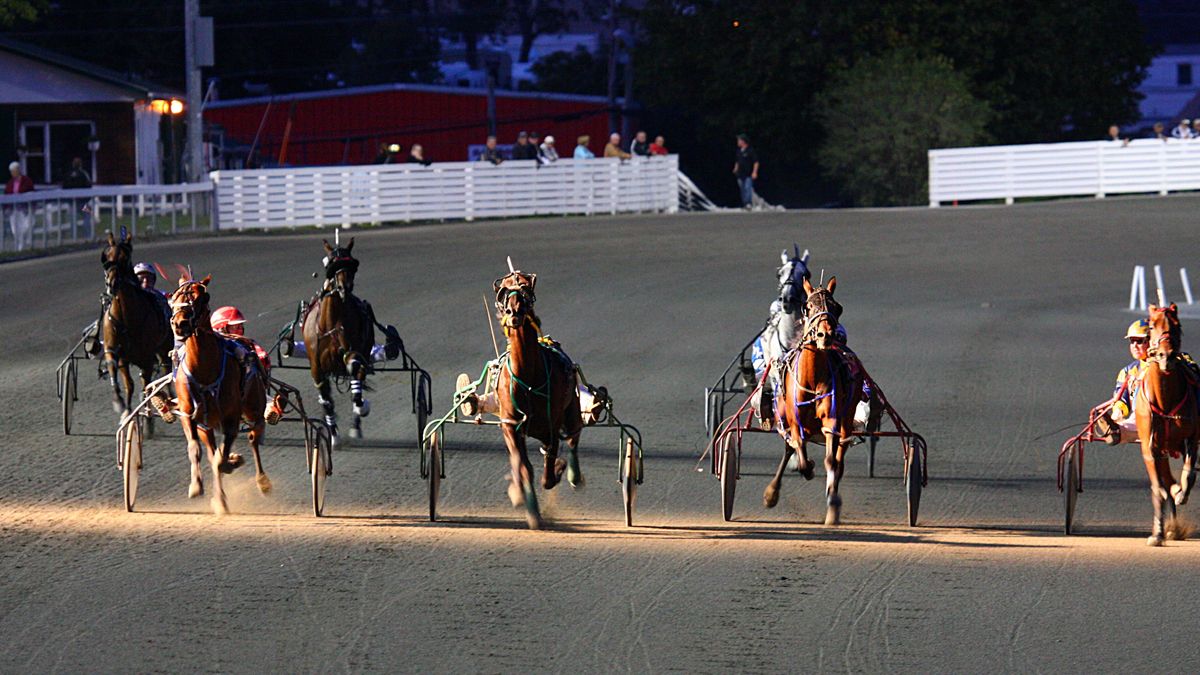
Pari-mutuel is the legal model
Betting on horse races is one of the oldest legal forms of wagering in Canada, and it works differently from casino games and sports betting. Under section 204 of the Criminal Code, the general gaming and betting offences do not apply to bets made through the agency of a pari-mutuel system on running, trotting or pacing races, provided the betting takes place on the racecourse of an association and follows the federal regulations. An association, in the Code's definition, is a body incorporated under federal or provincial law that owns or leases a racecourse and conducts horse races in the ordinary course of its business.
The joint OLG and Woodbine announcement on online race betting describes pari-mutuel wagering as the only legal form of betting on horse racing in Canada. In a pari-mutuel pool, every bet of the same type on the same race goes into one pot. Nobody sets fixed odds; the odds you see on the tote board move as money comes in and are only final when betting closes. The fewer people who backed the winning outcome, the more each of them receives.
How a pool is split: takeout and the federal levy
Two deductions come off every pool before winners are paid.
- The association's percentage, known as takeout. The racetrack operator keeps a share of each pool. The Pari-Mutuel Betting Supervision Regulations cap it: the maximum percentage an association may deduct and retain in respect of any pool is 35 per cent of the money bet into that pool. Each association sets its actual rates within that ceiling.
- The federal levy. Under subsection 204(4) of the Criminal Code, the operator pays the Receiver General one-half of one per cent of the total bets in each pool, or a greater fraction not exceeding one per cent if the Governor in Council fixes one.
What remains is divided among the winning tickets. Here is a simple illustration using round numbers chosen only to show the arithmetic: if a win pool held $10,000 and the combined deductions came to 20 per cent, $8,000 would be left for winners. If bettors had put $1,000 on the winning horse, every $2 ticket on it would return $16, including the original stake. Had only $400 been bet on that horse, the same $2 ticket would return $40.
Odds on the board are a shorthand for this calculation. Woodbine's beginner guide gives the payouts on a $2 bet at typical odds: 2/1 pays $6, 5/1 pays $12 and 10/1 pays $22. The house edge in racing is therefore the takeout, which is paid out of the pool rather than built into each game the way slot machine odds are.
What the Canadian Pari-Mutuel Agency does
The Canadian Pari-Mutuel Agency (CPMA) is a special operating agency within Agriculture and Agri-Food Canada. Its job is to supervise pari-mutuel betting on horse races so that it is conducted in a way that is fair to the public. Section 204 is its enabling legislation, and the Regulations made under it set the detailed rules.
- Permits and licences. The CPMA issues permits, licences and authorizations to racetrack and betting theatre operators.
- Audit and monitoring. It audits and monitors betting activity and enforces the regulations, including how pools and pay-out prices are calculated.
- Race integrity. The Code allows regulations on photo-finishes, video patrol and drug testing, and the CPMA's Equine Drug Control Program tests horses to discourage the use of prohibited substances.
- Stopping betting. Under subsection 204(7), an officer can order betting halted on a racecourse if satisfied that the section is not being followed in good faith.
Taken together, these powers mean a bettor in any province plays under one federal rulebook for how pools are formed, calculated and paid, even though the tracks and betting outlets are run by different associations.
Bet types and what they mean
The federal regulations use their own names for some bets, and tracks often use the North American names you will see on screens. The table matches them.
| Bet | Also called | You win if |
|---|---|---|
| Win | — | Your horse finishes first |
| Place | — | Your horse finishes first or second |
| Show | — | Your horse finishes first, second or third |
| Exactor | Exacta | You pick the first two finishers in exact order |
| Quinella | — | You pick the first two finishers in either order |
| Triactor | Trifecta | You pick the first three finishers in exact order |
| Superfecta | — | You pick the first four finishers in exact order |
| Daily Double | — | You pick the winners of two races |
| Pick 3, Pick 4 | — | You pick the winners of three or four consecutive races |
Each type has its own pool, so a horse can pay well in the win pool and poorly in the show pool on the same race. Woodbine states that the minimum basic bet is $2 and shows exotic bets in $1 units. A box covers every order of your chosen horses and multiplies the cost: in Woodbine's examples, a $1 exacta box costs $2, a $1 trifecta box $6 and a $1 superfecta box $24.
Where you can legally bet
- At the racecourse. The basic case under section 204: tickets bought through the association's pari-mutuel system on race day.
- At a betting theatre. The Code allows pari-mutuel betting in betting theatres licensed by a province and owned or leased by an association. These off-track sites are often called teletheatres.
- By account, phone or online. Subsection 204(2) treats a bet placed by any means of telecommunication to the racecourse or a betting theatre as made on the racecourse. This is the legal basis for account wagering. HPIbet, owned and operated by Woodbine Entertainment Group, describes itself as legal across Canada.
- Through OLG in Ontario. Since August 12, 2025, Ontario players can reach Woodbine's wagering product through OLG.ca and the OLG app. OLG states that these wagers are operated by Woodbine Entertainment Group, not conducted and managed by OLG, that they cannot be combined with other sports wagers or OLG.ca bonuses, and that horse racing wagers placed in Ontario can be redeemed only in Ontario.
Races run outside Canada can be included: the Code lets the Minister certify foreign governing bodies and permit betting on their races and this is the legal basis for betting on foreign races through Canadian outlets. For legal-age rules, the online channels set their own limits, and OLG requires players to be 19 or older for online sports betting. If you prefer to watch racing at a venue that also has gaming, our land casino guide covers the provincial venues.
Taxes and keeping it a hobby
The Canada Revenue Agency treats winnings from pool system betting the same way it treats lottery prizes: for a recreational bettor, they are generally not income. The exception is betting carried on as a business, judged on factors such as organization, special knowledge and the number and frequency of bets. Our page on Canadian gambling law and taxation summarizes the rules. Racing offers many races a day across simulcast tracks, so if betting is crowding out other things, the responsible gambling resources page lists provincial help lines.
Frequently asked questions
Is betting on horse races legal in Canada?
Yes, through the pari-mutuel system. Section 204 of the Criminal Code exempts pari-mutuel bets on running, trotting or pacing races made on an association's racecourse under federal regulations, and treats bets placed by telecommunication to a racecourse or betting theatre as made on the racecourse. That covers betting at tracks, licensed betting theatres and account wagering such as HPIbet.
What does the Canadian Pari-Mutuel Agency do?
The CPMA is a special operating agency within Agriculture and Agri-Food Canada that supervises pari-mutuel betting on horse races so it is fair to the public. It issues permits and licences to racetrack and betting theatre operators, audits and monitors betting, enforces the regulations and runs the Equine Drug Control Program, which tests horses for prohibited substances.
How much does the racetrack take from each bet?
Each association sets its own takeout, but the Pari-Mutuel Betting Supervision Regulations cap it at 35 per cent of the money bet into a pool. Separately, the Criminal Code requires a federal levy of one-half of one per cent of each pool, or a higher fraction up to one per cent if the Governor in Council fixes one. Winners share what remains.
What is the difference between an exactor and a quinella?
Both require you to pick the first two finishers. An exactor, often called an exacta, pays only if they finish in the exact order you chose. A quinella pays if they finish first and second in either order. Because a quinella is easier to hit, it usually pays less than an exactor on the same two horses.
Sources
- Justice Laws Website — Criminal Code, section 204 (pari-mutuel system)
- Justice Laws Website — Pari-Mutuel Betting Supervision Regulations (SOR/91-365)
- Agriculture and Agri-Food Canada — Canadian Pari-Mutuel Agency
- Agriculture and Agri-Food Canada — Canadian Pari-Mutuel Agency Regulatory Framework Overview
- OLG — OLG and Woodbine bring the excitement of horse racing to more Ontario bettors
- OLG — Live Horse Racing: About
- Woodbine Racetrack — New to Betting
- HPIbet — Home
- Canada Revenue Agency — Income Tax Folio S3-F9-C1, Lottery Winnings