Gaming law
Gambling on Cruise Ships From Canadian Ports: What Section 207.1 Allows
Casino newsUpdated
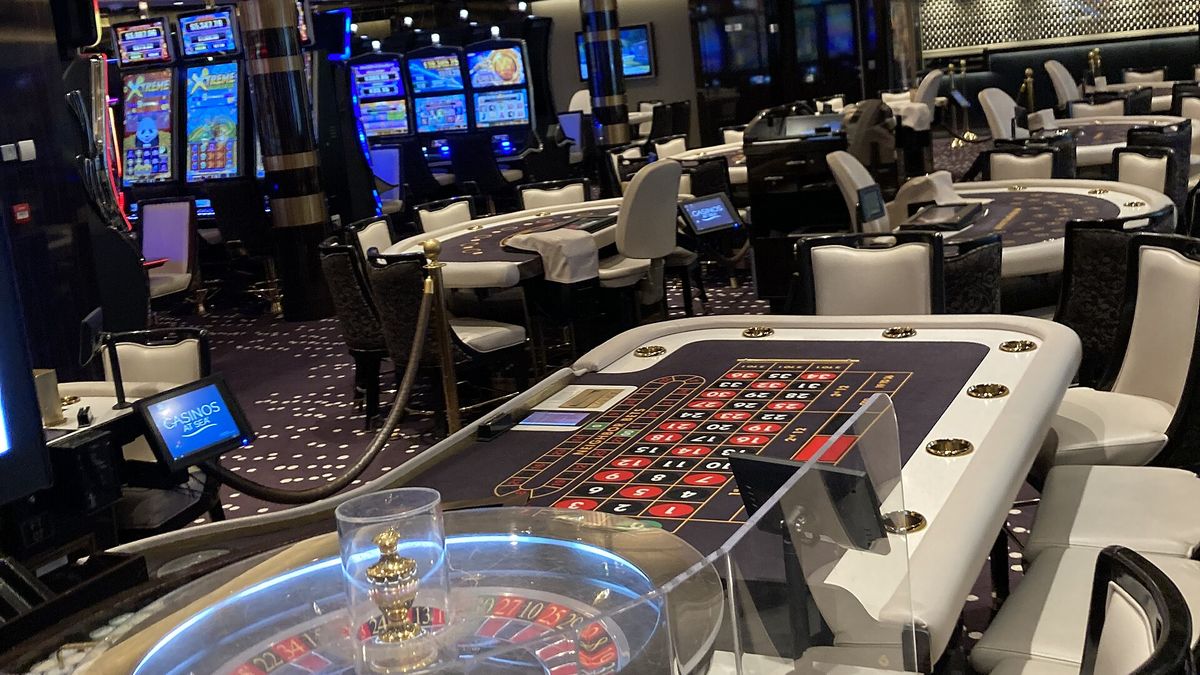
A cruise ship sailing from Vancouver, Montreal or Halifax may run its casino legally because section 207.1 of the Criminal Code exempts international cruise ships, but only under strict conditions. The casino must stay closed within five nautical miles of any Canadian port the ship calls at, the voyage must last at least 48 hours and touch a foreign port, and all play must stay on board.
Why a ship's casino is legal at all
In Canada, gaming and betting are criminal offences under Part VII of the Criminal Code unless an exemption applies. The everyday exemption is section 207, which lets provincial governments conduct and manage lottery schemes; that is why land casinos are run by or for provincial lottery corporations. A cruise line is not a province, so it needs a separate route.
That route is section 207.1, titled as an exemption for lottery schemes on international cruise ships. It states that, despite the gaming and betting provisions of Part VII, it is lawful for the owner or operator of an international cruise ship, or their agent, to conduct, manage or operate a lottery scheme during a voyage, and for any person to participate in it, as long as every condition in the section is met.
The term lottery scheme is broad. Section 207.1 borrows its meaning from paragraphs 206(1)(a) to (g), which cover schemes for disposing of property by chance, games of chance or mixed chance and skill, and games played with dice or wheels of fortune. Slot machines and table games such as blackjack and its basic rules fall within that description, which is why a ship can offer a full casino floor rather than just a bingo session.
The conditions in section 207.1, in plain terms
| Condition in the Code | What it means on board |
|---|---|
| All participants are on the ship | Only passengers physically aboard can play; nobody on shore can join a game remotely. |
| No communication link to outside lotteries, betting or pools | The ship's games cannot be connected to any lottery, bet or pool operated off the ship. |
| Not within five nautical miles of a Canadian port the ship calls at or is scheduled to call at | The casino is closed while the ship is in or near a Canadian port of call. |
| Voyage of at least 48 hours | Short coastal trips do not qualify. |
| Voyage includes international waters and at least one non-Canadian port (the port of departure or arrival can count) | A trip that never leaves Canadian waters or ports does not qualify for a foreign-registered ship. |
| No carrying passengers between two Canadian ports without calling at a non-Canadian port in between | A ship cannot use the exemption to run a casino on what is effectively a domestic Canadian voyage. |
A Canadian-registered ship has a second path: the exemption also applies if its whole voyage takes place outside Canada. A ship registered anywhere else must meet the voyage requirements in the table.
When the casino can open after leaving port
The only distance rule in section 207.1 is the five-nautical-mile limit around a Canadian port at which the ship calls or is scheduled to call. In practice, that means the casino stays dark at embarkation in a Canadian city and can open once the ship is more than five nautical miles from that port. The same limit applies again when the ship approaches a later Canadian port of call on the same voyage, and on the final approach to a Canadian port of disembarkation.
The Code does not set a separate distance from the shoreline in general, only from the Canadian ports on the ship's itinerary. It also does not address foreign ports: when a ship sailing from Vancouver or the St. Lawrence is near or docked in a port of another country, that country's law decides whether the casino may operate. Expect the casino to be closed whenever the ship is alongside a Canadian port, and treat the hours announced on board as the working answer rather than a calculation of your own.
Which voyages qualify
The section applies only to an international cruise ship, which the Code defines as a passenger ship suitable for continuous ocean voyages of at least 48 hours. A ship used or fitted primarily to carry cargo or vehicles is excluded, so a vehicle ferry does not become a floating casino simply because a crossing is long.
The voyage test matters most for itineraries that look domestic. A foreign-registered ship sailing between two Canadian cities must call at a non-Canadian port in between for the exemption to apply. A round trip that starts and ends in the same Canadian port must include international waters and at least one non-Canadian port, and must last at least 48 hours. Itineraries that begin in Canada and end abroad, or the reverse, can count the foreign start or end port as their non-Canadian call.
What is not allowed on board
- Sports and race betting. The definition of lottery scheme in section 207.1 excludes bookmaking, pool selling and the making or recording of bets on any race or fight, or on a single sporting event or athletic contest. A ship's casino cannot take a bet on a hockey game or a horse race under this exemption.
- Three-card monte, punch boards and coin tables. These are expressly excluded as well.
- Anything linked to shore. No game may be connected to a lottery, betting or pool system off the ship, and every participant must be on board.
- Play inside the port limit. Operating within five nautical miles of a Canadian port of call is outside the exemption.
The consequences are spelled out. Under subsection 207.1(3), conducting or operating a lottery scheme on a ship that does not meet the section's conditions is an offence punishable on indictment by up to two years' imprisonment or on summary conviction, and anyone who participates in such a scheme commits a summary conviction offence. For an ordinary passenger, the practical point is simple: if the casino is open, the operator is taking responsibility for meeting the conditions.
Age, cash and winnings
Section 207.1 does not set a minimum age. The cruise line sets its own casino age rules and states them in its passenger information, so check before you sail rather than assuming the age that applies on land. Provincial ages, generally 19 and older, or 18 in Alberta, Manitoba and Quebec, govern provincially run venues such as those listed in our guide to land casinos in Canada.
On winnings, the Canada Revenue Agency's position on gambling applies wherever you play: for a recreational player, gambling is generally not treated as a source of income, and the value of a lottery prize is not taxable as income or a capital gain. Professional or business gambling is the exception. Our overview of Canadian gambling law and taxation explains where that line sits.
A sea day with the casino open can stretch for hours, with no closing time the way a land venue has one. Setting a fixed budget before boarding and leaving cards in the cabin is a sensible habit on any cruise.
Frequently asked questions
Is it legal to gamble on a cruise ship leaving from a Canadian port?
Yes, if the ship and voyage meet section 207.1 of the Criminal Code. The ship must be an international cruise ship, the voyage must last at least 48 hours and include international waters and a non-Canadian port, every player must be on board, and the casino must not operate within five nautical miles of a Canadian port the ship calls at.
How far from port does a cruise ship casino have to be before it opens?
Under the Criminal Code, the casino cannot operate within five nautical miles of a Canadian port at which the ship calls or is scheduled to call. The Code sets no other distance rule. Near foreign ports, the casino's hours depend on that country's law, so the hours announced on board are the practical guide to when it opens.
Can I bet on sports or horse races on a cruise ship from Canada?
Not through the exemption in section 207.1. Its definition of lottery scheme excludes bookmaking and the making or recording of bets on any race or fight, or on a single sporting event or athletic contest. It also bars any link between the ship's games and betting or pool systems on shore, so the casino cannot pass bets to an operator on land.
What is the minimum age for a cruise ship casino in Canada?
The Criminal Code does not set one for cruise ships. Each cruise line sets its own casino age policy and publishes it in its passenger information, so check before booking. The provincial ages of 19 and older, or 18 in Alberta, Manitoba and Quebec, apply to provincial venues on land rather than to a ship's casino.
Sources
- Justice Laws Website — Criminal Code, section 207.1 (exemption for international cruise ships)
- Justice Laws Website — Criminal Code, section 207 (permitted lotteries)
- Justice Laws Website — Criminal Code, section 206 (offence in relation to lotteries and games of chance)
- Canada Revenue Agency — Income Tax Folio S3-F9-C1, Lottery Winnings